


The discussion surrounding the utilization of Thrace’s mineral wealth has been in the spotlight, with the project to exploit the gold and silver deposits in Perama, Evros, at the center of attention. The Environmental Impact Assessment for the project is now in the evaluation phase, opening a new cycle of dialogue between the company, the local community, and institutional stakeholders.
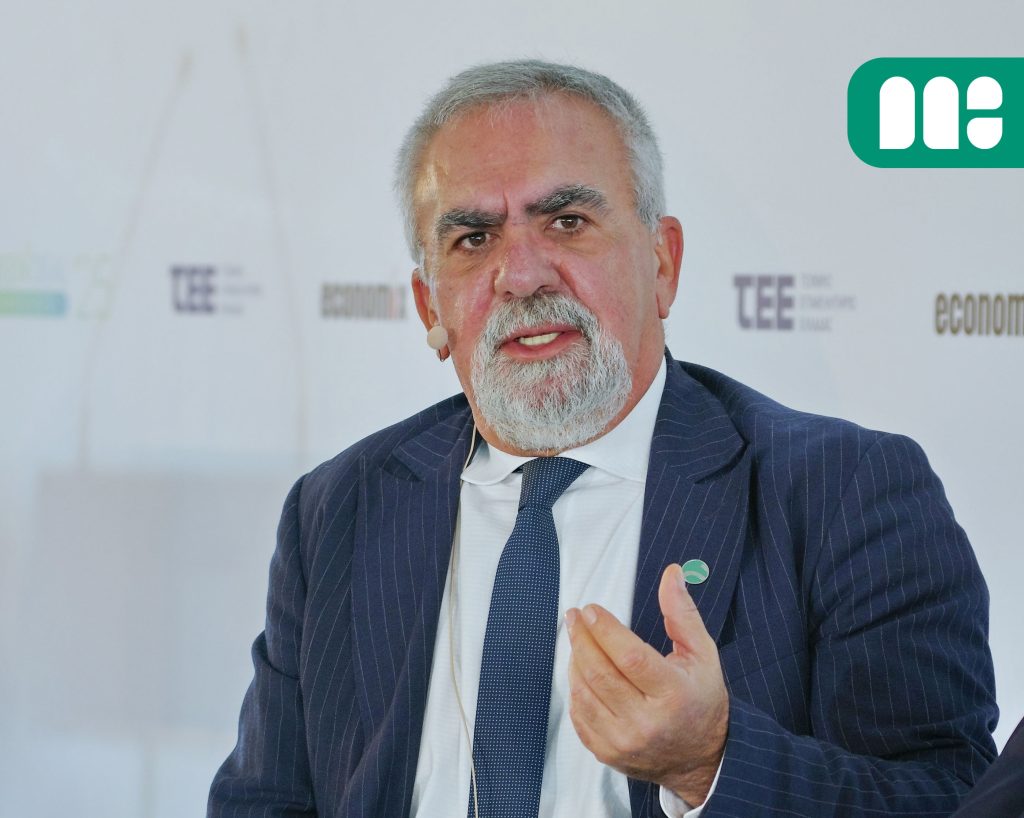
Within this context, the General Manager of Thracean Mining, Leonidas Bakouras, speaks to Capital.gr about the planning of the project in Perama, the modern technologies envisaged for environmental protection, the importance of scientific evidence in public dialogue, as well as the conditions under which the necessary social consensus can be built for the implementation of an investment of this scale.
Interview by Haris Floudopoulos.
Mr. Bakouras, the discussion about the “gold mines” in Thrace has been going on for almost 30 years. Recently, we saw once again a group of people expressing their opposition, saying that they prioritize “human lives over profits.” How do you respond to this?
L. Bakouras: First of all, I would like to say that the narrative about “gold mines” is no longer valid, neither in essence nor symbolically. I fully understand and respect the concerns of a portion of the people in Thrace; however, we must first clarify the following: the term “gold mines,” which has acquired a negative connotation over the years, does not correspond at all to our planning. What we are designing is a mining–metallurgical project in Perama, Evros, aimed at the utilization of gold and silver deposits using modern methods.
Essentially, what we are doing is aligning ourselves with the developmental needs and the prospects of the wider Thrace region. In other words, we are bringing a development proposal to the area, and I believe it should not be treated with disregard.
From 1999 until today, science and technology have made tremendous advances and have brought about significant changes in the mining process, always with a focus on greater safety for both the environment and human beings.
These new developments—which we have incorporated into the design of the mining project in Perama and included in the Environmental Impact Assessment that we submitted to the competent ministry—are what we want to serve as the basis for the dialogue we are conducting primarily with the people of the local community in Thrace, but also with all the scientific, social, and productive stakeholders involved.
The strongest argument from those who oppose the project concerns environmental degradation. They speak of depletion of water resources, toxic chemicals, and open tailings ponds that will pollute the aquifer. What does your planning actually provide for?
L. Bakouras: I understand the concern for the environment; however, modern mining activity places environmental protection as the highest priority at every stage, from planning and operation to restoration. That is precisely why we want all our data to be examined publicly and scientifically. At the same time, I am pleased that the people of Thrace are environmentally aware, as this allows us to speak on common ground. For Thracean Mining and its parent company, Eldorado Gold, environmental protection is a matter of utmost importance, and therefore we have made very strict provisions in the Environmental Impact Assessment.
First, there are no longer tailings ponds. We are implementing the world-leading technology of Dry Stacking, that is, the dewatering of residues from the mining process. This method significantly reduces the environmental footprint of the project, maximizes safety and stability even under extreme conditions, and enables progressive restoration from the very beginning of operations, while dramatically reducing water use.
Second, the water used in the production process is recycled, fully protecting the region’s water resources. In addition, this water mainly comes from collection rather than from the aquifer, while for backup purposes there is also a separate drilling well for the needs of the project. In fact, the water from this well is unsuitable for drinking and irrigation.
Third, we are installing a state-of-the-art Environmental Monitoring System which, through hundreds of sensors, monitors a wide range of indicators on a 24-hour basis. There will be measurements for water, soil, and air quality, dust levels, as well as noise levels, and all this data will be posted in real time on a database that will be accessible and understandable to everyone.
This system, moreover, is already being applied with great success at the Kassandra Mines and was developed by Hellas Gold and Eldorado, serving as a model at both the national and European level.
Fourth, the site will be restored progressively alongside the progress of mining operations. Regarding the restoration process, the strict legislative framework fully guarantees its orderly implementation.
However, strong criticism is also heard that the company is trying to “buy” social consent through CSR initiatives in hospitals, universities, associations, and infrastructure. Is this a tool of pressure?
L. Bakouras: Social contribution cannot and should not be criminalized, and for us it constitutes an act of responsibility.
Thracean Mining is not simply an investor that arrived, carried out a project, and will eventually leave. We are a cell of this society. Returning value to the region that hosts us is a strategic choice and a moral obligation for us, not a form of transaction.
L. Bakouras: We design and implement initiatives in specific areas such as Education, Health, Safety, the Environment, and Infrastructure, aiming to improve the quality of life for all of us and the overall prosperity of the region. Obviously, we do not claim that we solve all the local problems; however, we demonstrate in practice our willingness as a company to be part of the solutions.
The opposing side also raises the issue of jobs, arguing that hiring local residents aims to create an “army” that will support the company in case of social tension…
L. Bakouras: In any value system we may refer to, work holds an important place. We respect every opinion, but we deeply believe in the value of employment. Our goal is to give young people in Thrace the opportunity to remain in their region and build their future with security.
Within this framework, we offer jobs based on specific criteria and transparent procedures, meeting the company’s needs as they evolve over time. Through this process, we give dozens of people (of various specialties and levels of training—engineers, environmental scientists, mining engineers, technicians, field workers, and others) the opportunity to have employment in a modern environment with prospects for development and stability. In this way, we enable people who love their region to stay there and build their future with greater security.
The Prime Minister himself has stated that “for the investment to proceed, the consent of the local community is required.” How do you respond to this, and what is your next step in order to gain this trust?
L. Bakouras: We absolutely agree, as the “social license” is just as important to us as the environmental one. That is precisely why we seek and implement complete transparency in every action and communication we undertake. For the past year and a half, all our actions—as well as our planning—have been publicly known. We have participated in major conferences, we have spoken publicly, and we have explained the steps we are taking toward completing our planning.
Everyone now knows that we have prepared the Environmental Impact Assessment and submitted it to the competent Ministry. It is also widely known that this study is a serious scientific work for which we collaborated with the largest universities in Greece. We did not establish individual collaborations with academics; instead, we officially addressed the institutional project implementation bodies of each university.
From this point onward, we are entering a new phase. Consultation is not a process of approval but a process of building trust.
L. Bakouras: Within the framework of this dialogue, we are submitting the Environmental Impact Assessment for evaluation and we seek to listen carefully to the scientifically substantiated arguments of those who express reservations or disagreements regarding our planning. We emphasize the importance of a scientific approach, as we believe that dialogue should take place within a common, evidence-based framework. From our side, we have set the scientific bar high.
At the same time, however, we address everyone and not only those with scientific expertise; therefore, we are planning a variety of information initiatives. Among these is the operation of so-called Info Centers in Alexandroupoli, Komotini, and Sapes, where every citizen will be able to easily and quickly receive information about the Perama mining project, about modern mining activity, and about the developments surrounding it—presented in simple and understandable language for everyone.
There is often a perception that in extractive activities, mineral wealth is simply exported abroad as raw material and that the country loses the real added value. What exactly does your own production process foresee?
L. Bakouras: This is an extremely critical parameter that completely changes the data of our project and one that citizens should be aware of. At Thracean Mining, we will not simply export raw ore. Our planning provides for the full vertical integration of production within the country, with the production of a gold and silver alloy (the so-called doré metal) in our state-of-the-art facilities. In practical terms, this means that all the high added value of metallurgical processing remains in Thrace and in the national economy. This translates into more and more specialized jobs for our scientists, higher tax revenues for the state and municipalities, and the transformation of Thrace into a modern center for the production of a final product, rather than merely a site of mining activity.
In closing, Mr. Bakouras, the history of the “gold mines” in Thrace now spans three decades. How much longer do you think it will continue?
L. Bakouras: We all know that the region of Thrace needs support from investment initiatives and proposals that will stimulate its economy and its prospects. Our proposal has all these characteristics, and we are bringing it to the table for dialogue.
I know very well that the people who worked on the preparation of the Environmental Impact Assessment did so with consistency, method, and dedication to science and legislation. What remains now is to share our planning with the local community, explain our proposal in detail, and discuss thoroughly any concerns that may exist.
For these discussions, there are specific institutional procedures. We hope that they will begin soon and that we will ultimately succeed in making the people of Thrace active participants in our investment proposal.