A new Corporate Social Responsibility initiative, providing free scientific and technical support through ERGOPLANNING and reflecting the Company’s commitment to the parallel and sustainable development of all productive activities across Thrace.
Thracean Mining has launched a new practical support programme for farmers, livestock breeders and beekeepers across Thrace, offering voluntary participation and access to specialised support at no cost to producers.
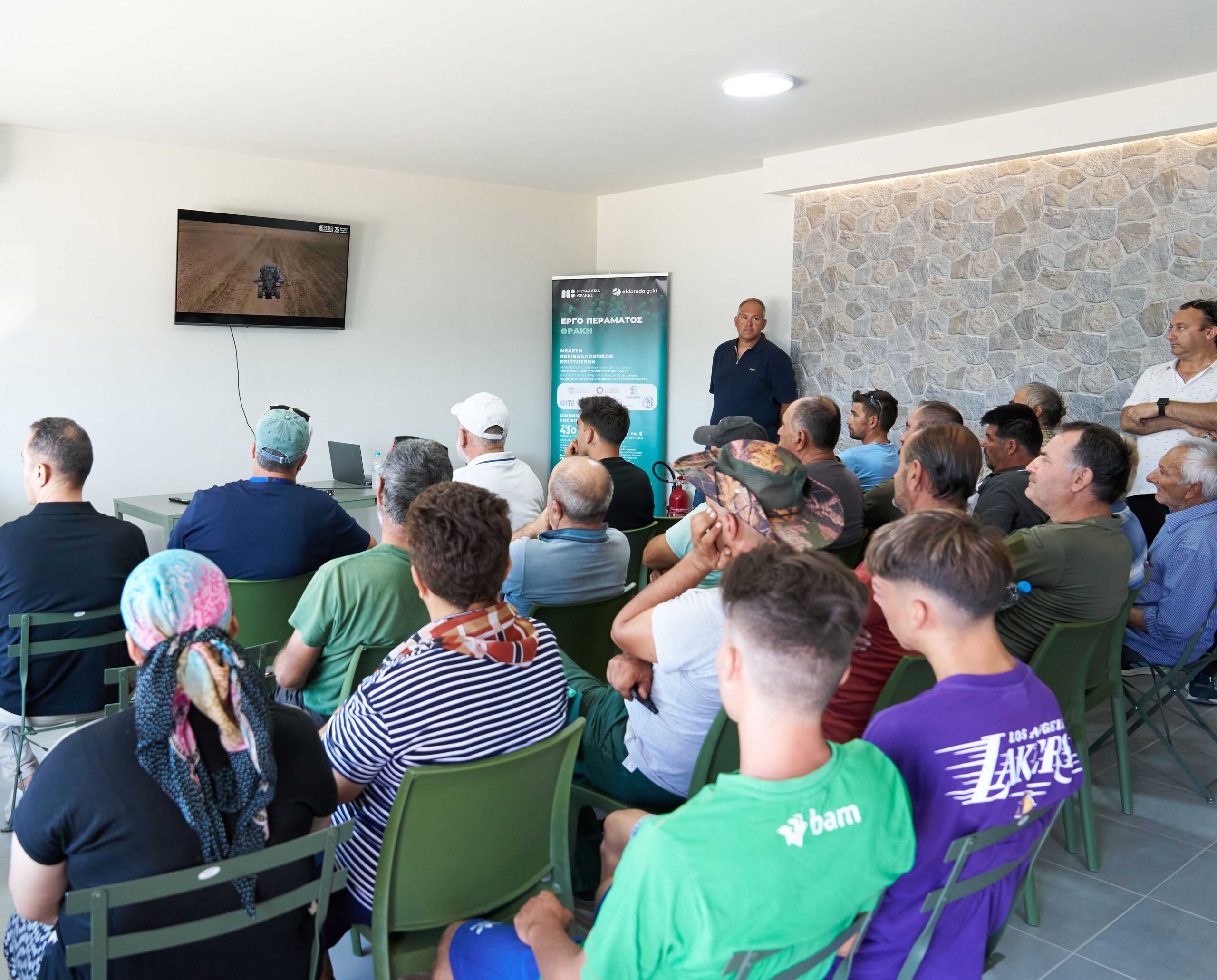
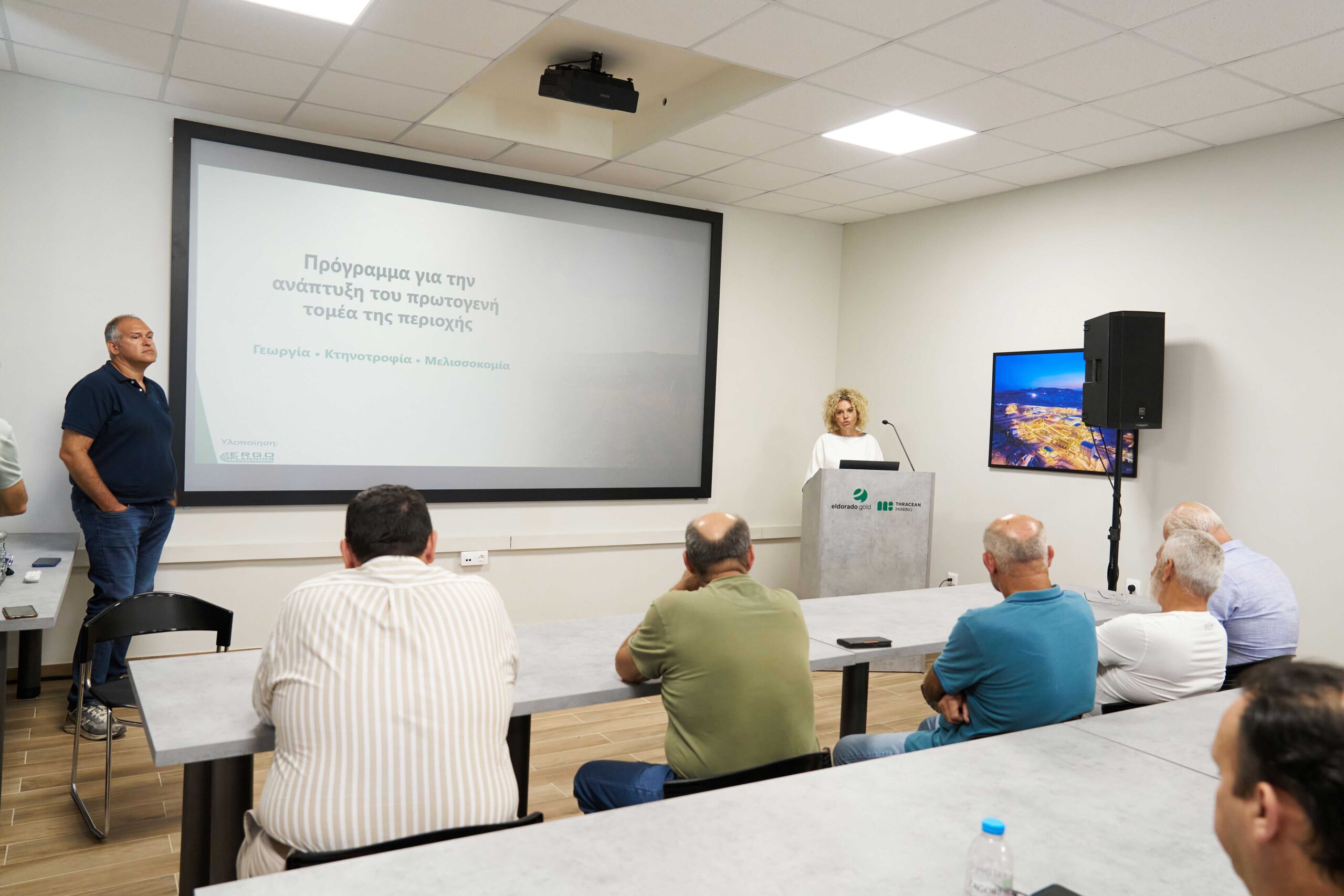
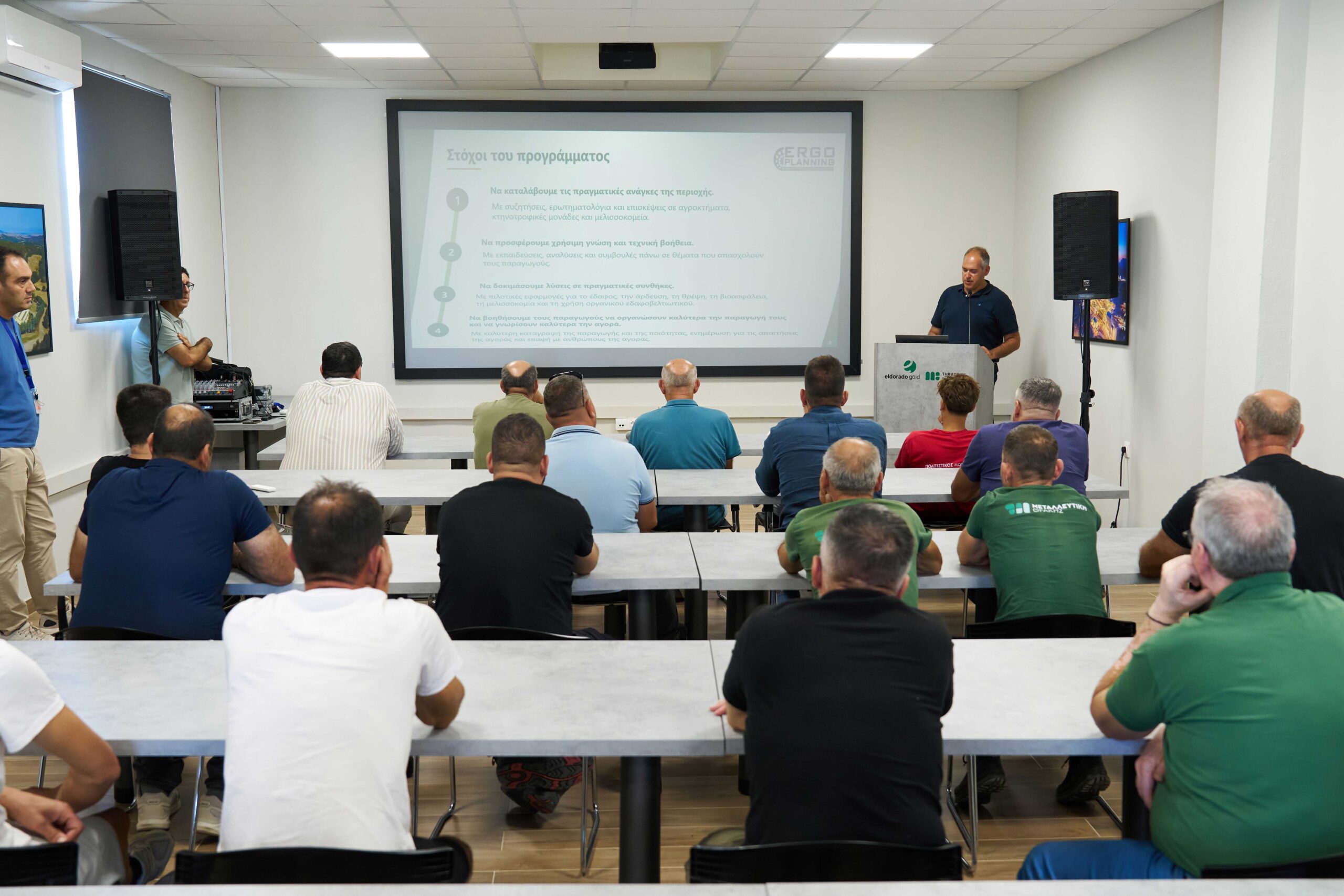
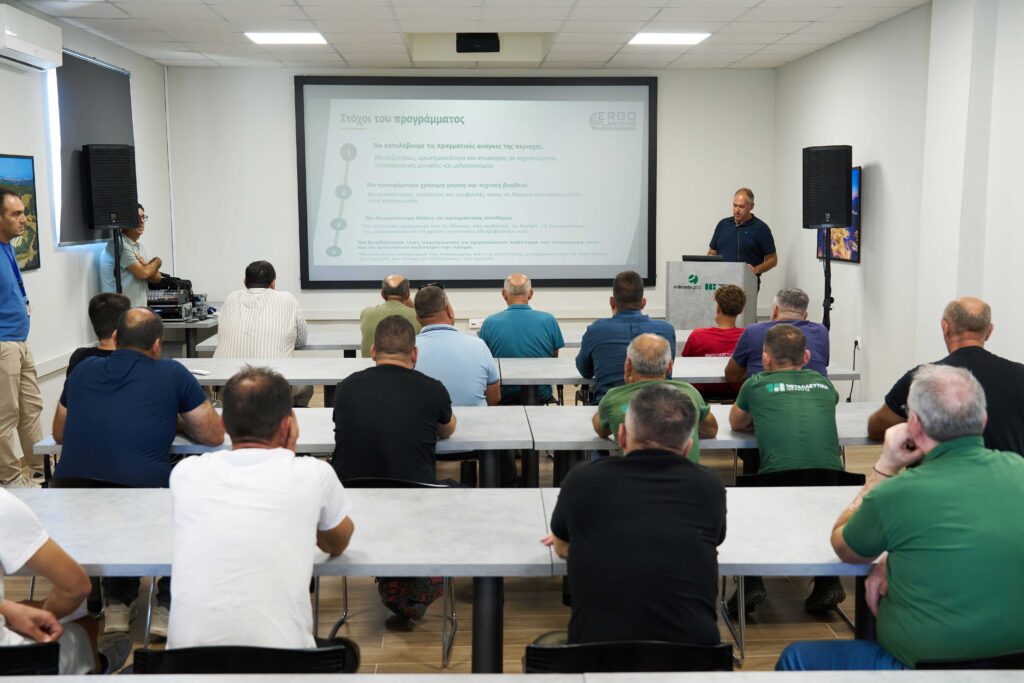
The programme was introduced through two open information sessions, held on Monday, 31 August in Sapes and on Tuesday, 1 September in Komaros, at the Company’s Community Information Centre.
Practical support tailored to producers’ real needs
The programme is built around a simple principle: producers themselves know their land, their livestock and their operations better than anyone. What can make a meaningful difference is easy, cost-free access to specialised scientific expertise, reliable laboratory data and practical solutions that respond to their actual needs.
To deliver this support, Thracean Mining has partnered with ERGOPLANNING, which is responsible for the implementation of the programme.
ERGOPLANNING brings 25 years of experience in the primary sector and agricultural development, having worked with thousands of producers, agricultural businesses and collective organisations. Through ERGOhub, its broader network of scientific and technical specialists, the programme can draw on expertise across a range of fields, including agricultural development, the environment, the green economy, research and innovation. Laboratory support is provided by QLAB, with the capacity to perform analyses of soil, water, animal feed and agricultural products.
What the programme includes
The programme is structured around six key areas:
- Needs assessment, through direct engagement between specialists and producers to identify the real challenges and requirements of each individual farm or operation.
- Free laboratory analyses, where required, including soil, water, animal feed and product testing.
- Training and practical applications in agriculture, livestock farming and beekeeping.
- Tailored advisory support, for producers who wish to participate, based on the specific characteristics and needs of their operation.
- Pilot applications of new practices and solutions in selected farms and operations, always on a voluntary basis.
- Exploring opportunities for stronger market links, with the aim of improving production and quality, managing production costs more effectively and enhancing the visibility and value of local products.
Participation in the programme is entirely voluntary and free of charge. Each producer can choose to participate only in the activities that are relevant to their own needs.
Through this initiative, Thracean Mining is putting into practice its broader vision for the development of the region: for the Perama Project to form part of a wider development path for Thrace, creating new opportunities while at the same time supporting the productive activities that already exist in the region and will continue to exist long after mining activities have concluded.
The initiative forms part of Thracean Mining’s Corporate Social Responsibility programme and reflects a broader principle that guides the Company’s approach to regional development: a major investment cannot and should not exist in isolation from the place in which it operates.
On the contrary, an investment of this scale can help create a wider ecosystem of businesses, professionals, suppliers and productive activities, generating new opportunities and added value for the local economy. Within this context, the development of the Perama Project is intended to progress alongside the activities that have long been part of Thrace’s economy and identity, including agriculture, livestock farming and beekeeping.
For Thracean Mining, mining and the primary sector are not competing choices. Sustainable development requires different productive activities to coexist, evolve and prosper side by side, with respect for the environment and with tangible benefits for local communities.